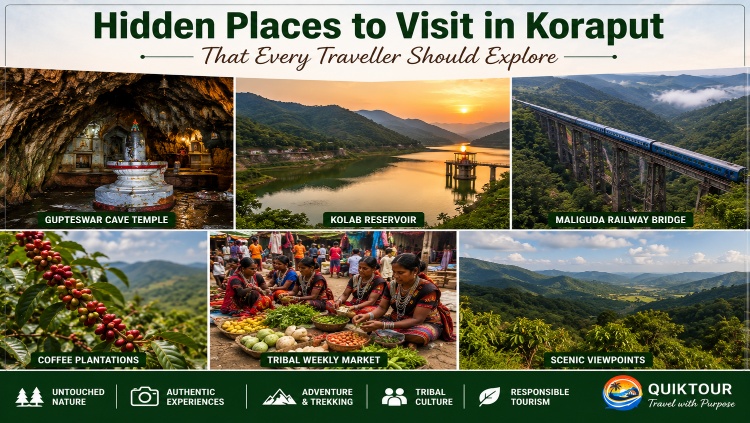
While Deomali Peak and Duduma Waterfall attract most visitors, Koraput is filled with lesser-known destinations that reveal the district’s true beauty. These hidden gems are perfect for travellers seeking peaceful landscapes, authentic local experiences and photography opportunities away from crowded tourist spots.
Gupteswar Cave Temple
Nestled amidst dense forests near the Odisha–Chhattisgarh border, Gupteswar Cave Temple is one of Koraput’s most fascinating spiritual and geological attractions. Dedicated to Lord Shiva, the temple is located inside a natural limestone cave, creating a mystical atmosphere that attracts both devotees and nature lovers.
Reaching the cave involves a scenic walk through forested surroundings, making the journey as memorable as the destination itself. During Mahashivaratri, thousands of pilgrims gather here, while the rest of the year the cave offers a peaceful experience surrounded by nature.
Highlights
- Ancient cave temple
- Dense forest surroundings
- Religious significance
- Natural limestone formations
- Excellent photography opportunities
Kolab Reservoir
Often overlooked by mainstream tourists, Kolab Reservoir is one of the most picturesque water bodies in southern Odisha.
Surrounded by rolling hills and lush forests, the reservoir offers breathtaking sunrise and sunset views. The calm waters, cool breeze and peaceful atmosphere make it an ideal destination for couples, families and photographers looking to escape busy tourist locations.
The nearby hydroelectric project also showcases how Koraput has balanced development with environmental conservation.
Maliguda Railway Bridge
Railway enthusiasts and photographers should not miss the historic Maliguda Railway Bridge, one of India’s highest broad-gauge railway bridges.
The engineering marvel is surrounded by dramatic valleys, tunnels and mountain landscapes, making the railway journey through Koraput one of the most scenic train routes in Eastern India.
Watching trains slowly cross the bridge against a backdrop of mist-covered hills is an unforgettable experience.
Coffee Plantations of Koraput
Few travellers realise that Odisha produces premium-quality Arabica coffee.
The high-altitude climate of Koraput provides ideal conditions for coffee cultivation, and today the district has become one of India’s emerging specialty coffee regions.
Walking through coffee estates during the early morning is a refreshing experience. Visitors can observe coffee cultivation, learn about processing methods and taste locally grown coffee that has gained recognition in national and international markets.
Coffee tourism is gradually becoming one of Koraput’s unique attractions, offering visitors a chance to experience agriculture, sustainability and local entrepreneurship together.
Tribal Tourism in Koraput
Koraput is home to one of India’s richest concentrations of indigenous tribal communities.
More than sixty tribal communities live across Odisha, and several of the most culturally significant groups—including the Paraja, Bonda, Gadaba, Kondh, Durua and Bhumia communities—have long-standing traditions in the Koraput region.
Their vibrant festivals, traditional music, handcrafted jewellery, weaving, agriculture, indigenous knowledge systems and colourful weekly markets provide visitors with meaningful cultural experiences.
However, tribal tourism should always be approached with respect and sensitivity. These communities are living cultures, not tourist attractions. Responsible travellers observe local customs, seek permission before taking photographs and support local artisans by purchasing authentic handicrafts directly from them.
Ethical tribal tourism not only enriches the visitor’s experience but also contributes to preserving cultural heritage and supporting local livelihoods.
Weekly Tribal Markets – The Living Museums of Koraput
One of the most fascinating experiences in Koraput is visiting its traditional weekly tribal markets, locally known as “haats.”
These markets are far more than places of commerce. They are vibrant social and cultural gatherings where people from surrounding villages come together to trade agricultural produce, forest products, spices, handmade tools, traditional jewellery, textiles and handicrafts.
Walking through a tribal market offers travellers an authentic glimpse into everyday life in rural Odisha. The colourful attire, local dialects, fresh organic produce and handcrafted goods create an atmosphere unlike any conventional shopping destination.
For photographers and cultural enthusiasts, these markets provide some of the most genuine travel experiences in Eastern India.
Nature Tourism in Koraput
Koraput’s natural beauty extends far beyond its famous attractions.
Rolling valleys stretch across the landscape, mountain streams flow through dense forests and seasonal waterfalls appear after the monsoon. Scenic viewpoints reveal endless layers of green hills, while winding roads make every drive feel like a journey through untouched wilderness.
Unlike heavily commercialised hill stations, Koraput retains its authenticity. Visitors can enjoy quiet mornings, clean air, panoramic landscapes and peaceful evenings without large tourist crowds.
This makes Koraput especially attractive for slow travel, wellness tourism, digital detox holidays and nature photography.
Adventure Activities in Koraput
Adventure tourism is steadily gaining popularity across Koraput.
Visitors can enjoy:
- Trekking to Deomali Peak
- Mountain hiking
- Forest nature walks
- Scenic road trips
- Waterfall exploration
- Camping (where permitted)
- Landscape photography
- Birdwatching
- Cycling through rural villages
- Off-road driving experiences
The varied terrain of the Eastern Ghats provides opportunities for both beginners and experienced outdoor enthusiasts.
Photography Paradise
Koraput offers changing landscapes throughout the day.
Morning mist covers valleys around Deomali.
Golden sunlight illuminates coffee plantations.
Waterfalls shimmer during the afternoon.
Evening sunsets paint mountain ranges in shades of orange and crimson.
Photographers interested in landscapes, wildlife, tribal culture, architecture or travel storytelling will find endless inspiration throughout the district.
Every season presents a different visual character, making repeat visits equally rewarding.
Why Koraput is Perfect for Responsible Tourism
As travel trends shift towards meaningful experiences, Koraput stands out as a destination where tourism can positively contribute to conservation and community development.
Visitors who choose local homestays, purchase handicrafts directly from artisans, hire local guides and respect cultural traditions help strengthen the regional economy while preserving its heritage.
Responsible tourism also encourages the protection of forests, biodiversity and indigenous knowledge systems, ensuring that Koraput’s extraordinary landscapes remain unspoiled for future generations.
Quik Tour Expert Insight
Many first-time visitors try to cover Koraput in a single day before moving on to another destination.
While this is possible, it rarely does justice to the region.
At Quik Tour, we recommend spending at least three to four days in Koraput. This allows enough time to experience Deomali at sunrise, explore Duduma Waterfall, visit tribal markets, enjoy coffee plantations, discover hidden viewpoints and experience the peaceful rhythm of the Eastern Ghats without rushing.
Travellers who slow down often discover that Koraput becomes one of the most memorable highlights of their Odisha journey.